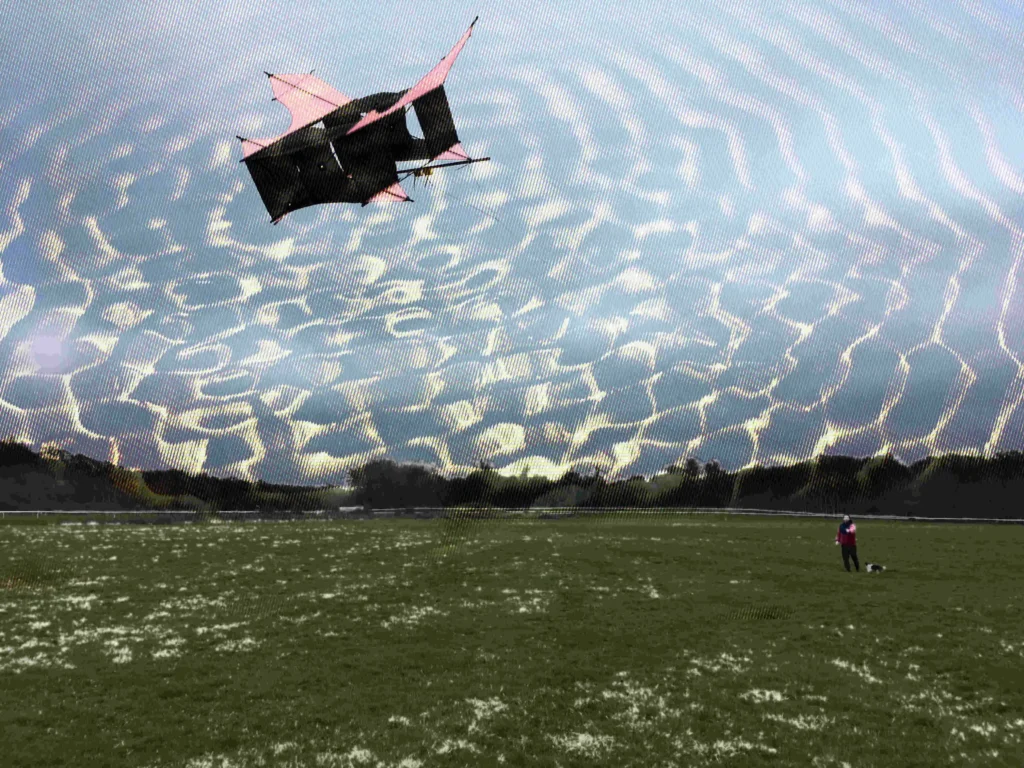
AFO
Aeolian Flying Organ
Project Proposal by Nathaniel Mann
Overview:
Aeolian Flying Organ (AFO) proposes an innovative new instrument: a flying, playable organ, harnessing the breath of the wind, and giving voice to the power of nature.
The AFO offers musicians and composers the chance to duet with our changing climate, and through sound and spectacle shift our consciouses towards the grace and power of the elements.
AFO takes its inspiration from centuries old traditions of flute whistles, and marries it with cutting edge wireless technology, 3D printing, and aerodynamic and acoustic design, to create an entirely original experience.
At ground level a wireless keyboard allows musicians to perform with the AFO, the sound of the aeolian flutes reaches the audience purely acoustically, with no speakers, creating an ethereal, otherworldly sensation.
Modalities:
1- Standalone Installation: Playing precomposed works.
2- Interactive Installation: Audience can play the AFO
3- Live Performance and Interdisciplinary Collaborations:
AFO as a live instrument for concerts and performing with other musicians, dancers, and Son et lumière – incorporating nighttime lights and projection.
Collaborative Framework:
AFO is conceived as both a longterm project and a collaborative framework. Composers, artists and other creatives will be invited to create new projects and performances for the AFO for diverse contexts and settings, working with themes of nature, landscape, climate crisis, and many more to be explored.
Accessibility: Haptic Speakers
To enable deaf or hard-of-hearing audience members to experience the AFO a haptic speaker system will be developed, which enables these audience members to feel the music of the wind through their hands and bodies.
Background: Oxford Project Links and Legacy
AFO acts a continuation of Nathaniel Mann’s previous project Pigeon Whistles (2013). Mann was the ‘OCM/Sound & Music Embedded Composer in Residence’ at the Pitt Rivers Museum, where he was inspired by the pigeon flutes in the collection. He collaborated with pigeon fancier Pete Petrovich to train pigeons to fly with hand-crafted flutes attached to their tails. The resulting soundscape toured as part of the OCM/Without Walls Project “Audible Forces”, and was described by The Guardian as “the closest thing to heaven”. The work received the George Butterworth Award for Composition, and was the subject of a BBC Radio 4 feature documentary “The Pigeon Whistles”.